Organ-harvesting dungeon and fake police stations found in Cambodia scam compound
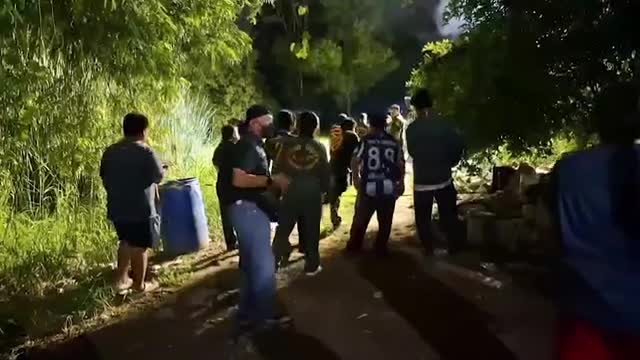
An organ-harvesting dungeon and fake police stations were found in a sprawling scam compound in Cambodia.
Underperforming scam operators were allegedly beaten, tortured, and locked up at the 80-hectare fraud complex in the country's O Smach area, near the Chong Chom border crossing with Thailand.
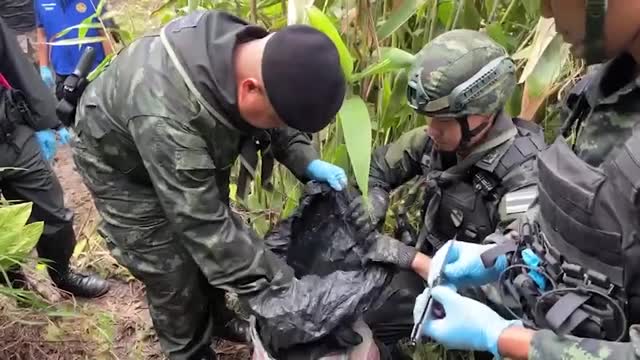
Thai military officials, who struck the complex last year, said the newly built, Chinese-only Zhongshan Hospital in the area was also used as an organ-harvesting site for workers who failed to meet targets.
Chilling footage showed the operating theatre where the illegal surgeries were allegedly carried out. The room was equipped with forceps, scissors, and medical tools believed to have been used to extract hearts and kidneys.
The organs were suspected of being sold to generate additional income.
The compound also housed mock police stations designed to impersonate law-enforcement agencies from countries such as China, Indonesia, Brazil, Australia, Singapore and Vietnam. Scammers would call their victims while posing as cops - demanding money for bogus cases.
Authorities discovered scam scripts, police uniforms, replica interrogation rooms and photographs depicting arrests. These facilities were designed to resemble genuine police premises in each country.
A testing area and training materials were used to assess scam workers, many trafficked from impoverished countries such as Bangladesh and the Philippines.
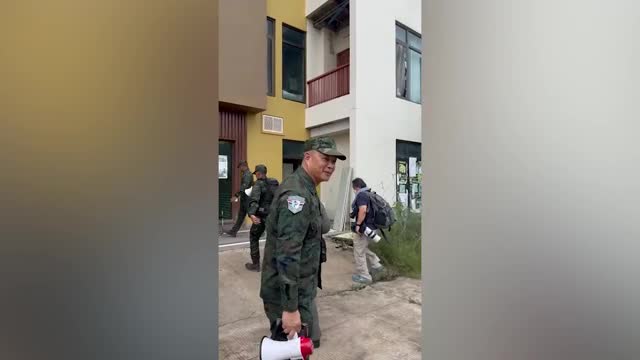
Thai officials exposed the facilities in a visit with a Southeast Asian delegate on September 7, amid pressure to crack down on Chinese-run cybercrime networks.
On September 8, it would mark nine months since Thai soldiers liberated the area from Sino-Cambodian state crime networks. Soldiers allegedly launched sniper and drone attacks on the Thai military during the border conflict.
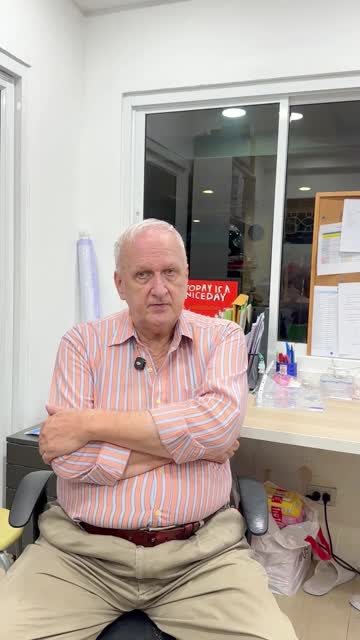
Air Chief Marshal Prapas Sornchaidee, director of the Thailand-Cambodia Joint Information Centre, said multilateral cooperation was required to eradicate the scammer gangs.
He said: 'These are not simply allegations. Several agencies have already gathered information to support further action, including asset seizures, disruption of financial channels and preventing investment.
'The evidence can be used by countries in Europe, Asia and elsewhere to expand their investigations and take further action.'
Prapas also denied that the scam crackdown was being used as a pretext to expand Thai territory.
He added: 'We were unaware of the scammer activities in these areas beforehand. It's just that the Cambodian side has been using these areas as a military base to attack Thailand, thus necessitating control of the territory.'
The complex in the O Smach area near the Chong Chom border crossing consists of 157 buildings divided into zones, with Zone E identified as a key centre for international scam operations.
Suspected scammers reportedly worked from 9 pm to 3 am hours to align with victims in Western countries in Europe and America.
Inside, investigators had found offices filled with computers, dialogues and training manuals in multiple languages, detailing modus operandi including romance scams, fake business ventures and impersonation schemes.
Chilling prison cells were also discovered in the basement, where underperforming workers were thrown in as punishment. The cramped rooms were equipped with surveillance cameras and what appeared to be torture devices like cuffs, ball gags, and chains, used to punish those who failed to meet targets.
Prisoners were given empty water bottles to use as makeshift toilets.
The squalid conditions sharply contrasted with the VIP section of the complex, reserved for Chinese call centre bosses.
The self-contained mini city was reportedly replete with shops, massage parlours, an exclusive entertainment zone featuring a casino, karaoke bars and sex venues for wealthy Chinese businessmen and senior figures, with ordinary scam workers banned.
Remote regions of Cambodia spawned thousands of call centre scam hubs for online fraud in recent years.
Government top brass are widely believed to have been complicit in the system, receiving vast sums in order to protect the criminals running the operations.
The United Nations found that billions of dollars have been generated from the trafficking of hundreds of thousands of people forced to work in these compounds, usually headed by Chinese syndicates.
Referring to the scam centres, Jacob Sims, Visiting Fellow, Asia Centre, Harvard University, said: ‘It is impossible to imagine that such vast wealth would be moving through the system without the explicit knowledge and participation of its strongman and his immediate circle.'
The US State Department's Trafficking in Persons report criticised the ‘official complicity' in the networks, while Amnesty International said the ‘Cambodian authorities have deliberately ignored a litany of human rights abuses including slavery, human trafficking, child labour and torture'.